
Advancing Regenerative Medicine: A Supplement to Modern Aesthetics
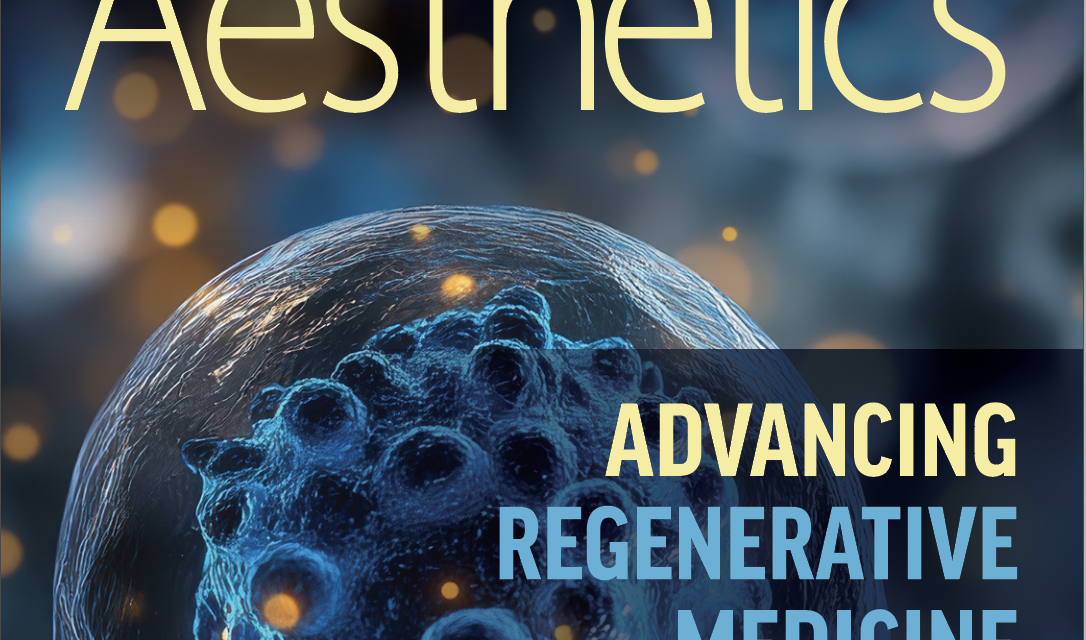

REVOLUTIONIZING MEDICINE THROUGH BIOLOGICAL TISSUE REGENERATION
BY AZZA HALIM, MD, MS
Advances in regenerative medicine are rapidly transforming aesthetic and medical practice, offering clinicians new ways to stimulate tissue repair, rejuvenation, and regeneration. From biostimulators to stem cells and exosomes, biologically driven therapies are redefining how we approach aging and tissue health. However, as enthusiasm grows, so does confusion, particularly regarding the differences between these emerging technologies and how they should be used responsibly.
One of the most important distinctions clinicians must understand is the difference between stem cells and exosomes. Stem cells are living cells capable of proliferation, regeneration, and differentiation. They can be programmed and sourced in various ways, including autologous, allogeneic, embryonic, or induced pluripotent sources. Because stem cells are biologically active cells, understanding their origin is critical not only for efficacy but also for safety concerns such as mutagenicity and potential oncogenic risk.
Exosomes, meanwhile, are acellular extracellular vesicles, typically measuring 50–130 nm. They are secreted by cells (often stem cells) and function as molecular signaling packages containing proteins, lipids, and RNA. Once considered cellular “waste,” exosomes are now recognized for their ability to influence cellular communication and tissue repair.
Despite their promise, the rapid commercialization of exosome products has created challenges. The number of companies marketing exosomes has grown dramatically worldwide, and not all products are well characterized. Clinicians must understand the source of these products—whether from Wharton’s jelly, placenta, or other tissues—as well as their molecular composition and manufacturing standards.
Equally important is maintaining regulatory and medical-legal awareness. Current legislation and regulatory oversight surrounding stem cells and exosome therapies continue to evolve, and practitioners must be cautious about marketing claims and treatment descriptions. Proper sourcing, sterility, characterization, and adherence to good manufacturing practices are essential to ensure patient safety.
Beyond exosomes and stem cells, regenerative aesthetics also incorporates biostimulators and nucleic acid–based therapies, including polynucleotides (PN) and polydeoxyribonucleotides (PDRN). These molecules differ primarily in size and clinical behavior. PDRN tends to act more rapidly and transiently, while PN has a longer biologic activity, supporting tissue remodeling and skin conditioning.
Ultimately, regenerative medicine is about activating the body’s natural repair pathways. Many of these treatments stimulate collagen production—particularly types I and III—or influence cellular signaling involved in tissue regeneration. Their effectiveness depends not only on the product itself but also on appropriate application, depth of delivery, and patient selection.
As regenerative therapies continue to evolve, clinicians must approach them with both enthusiasm and scientific rigor. Understanding the differences between stem cells, exosomes, secretomes, and other biologic technologies is essential—not only to achieve optimal results but also to practice responsibly.
When used correctly and thoughtfully integrated into clinical practice, biologic regenerative therapies hold the potential to revolutionize medicine by moving beyond surface-level treatments and addressing aging and tissue repair at the cellular level.
Editor’s Note: This article is based on a presentation delivered at the 2025 Tell-All Tribune: An Aesthetic Think Tank.
SHOWCASE: PROMOTING AND ACCELERATING SKIN REJUVENATION
Sponsored by Lynch Regenerative Medicine
Regenerative medicine is taking the aesthetics world by storm in the form of PDRN, exosomes, and more. But among all the buzzy treatments, one industry-disruptor backed by three decades of research, platelet-derived growth factor (PDGF) is in a category of its own.
PDGF is naturally found in human blood platelets and promotes and accelerates the skin-rejuvenation process. It is one of the most extensively studied signaling proteins in medicine and is backed by more than 1,000 peer-reviewed publications and 100-plus clinical studies.
In 2024, Lynch Regenerative Medicine harnessed the power of PDGF to launch a first-of-its-kind topical cosmetic: ariessence pure PDGF+®. The proprietary, pure, potent formulation consists of recombinant, sterile PDGF combined with sterile hyaluronic acid and is utilized as a post-procedure enhancement to improve the appearance of skin. It boosts skin’s natural restorative ability, which can lead to a smoother, more even skin texture and can help minimize the appearance of scarring. It is designed to enhance patient results and reduce downtime when used following treatments including microneedling, radiofrequency (RF) microneedling, laser skin resurfacing, and peels. n
For more information on how to utilize ariessence pure PDGF+ in your practice, visit ariessence.com.
Classification statement: ariessence pure PDGF+® is a topical cosmetic intended to enhance the appearance of the skin.


Ready to Claim Your Credits?
You have attempts to pass this post-test. Take your time and review carefully before submitting.
Good luck!
Recommended
 SEP-OCT 2026 ISSUE
Understanding Aging Helps Predict Impact of Ingredients
Michael Gold, MD, FAAD; Janet Wangari Olivero, PhDMichael Gold, MD, FAAD; Janet Wangari Olivero, PhD