
Key Takeaways
- Provider expertise remains critical even for commonly performed laser procedures; inappropriate energies or inadequate technique may result in treatment failure, fibrosis, pigmentary alteration, or permanent scarring.
- Nd:YAG lasers can be particularly valuable for hair removal and pseudofolliculitis barbae in darker skin but require appropriate technique and parameter selection to minimize adverse effects.
- Fractional lasers have broadened the ability to treat skin of color, with transient post-treatment hyperpigmentation possible but prolonged pigmentary complications generally avoidable with appropriate settings.
- Treatment of higher Fitzpatrick skin types may require lower fluence, longer pulse widths, careful monitoring of tissue response, and counseling regarding potentially longer treatment courses.
The path from the early lasers of the 1980s to today’s devices has been anything but linear. Early adopters have pushed boundaries to advance the field, learning lessons along the way that have informed subsequent innovations. Modern Aesthetics March/April Guest Medical Editor Jill Waibel, MD, FACS, FAAD, sat down with three fellow pioneers in the field for an inspirational and reflective journey through the history of laser and light-based technology. This is the fourth excerpt from that conversation. (Editor’s note: This transcript has been lightly edited for clarity and conciseness).
LASER HAIR REMOVAL AND IPL
Dr. Waibel: In 2010, we incorporated pigments, hair, and more. How did that change what we were doing with lasers?
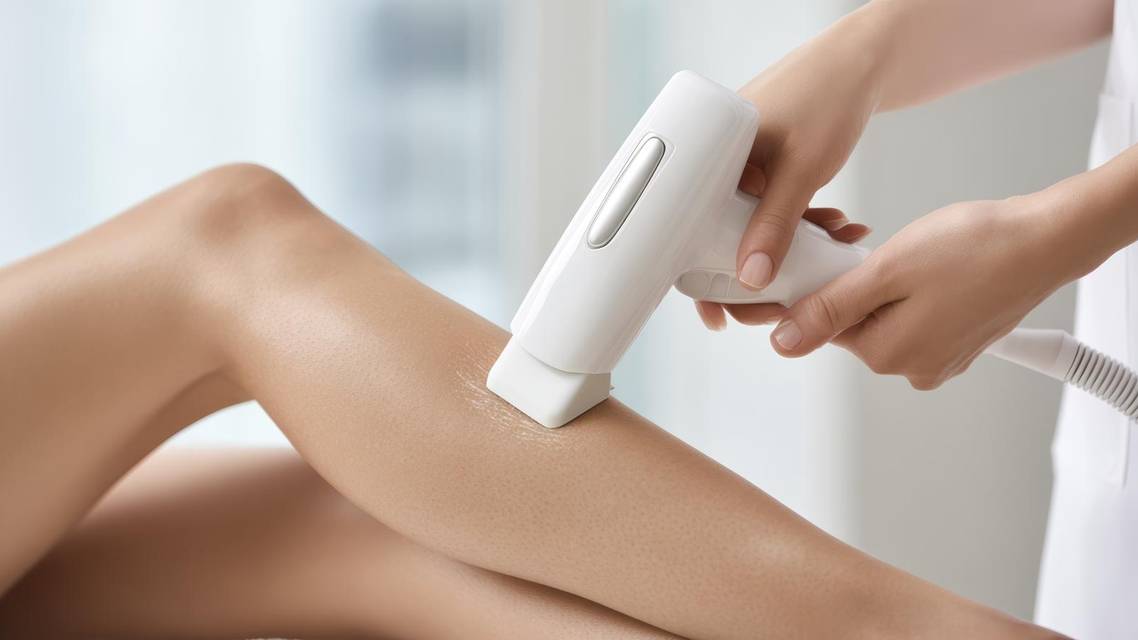
Dr. Ross: One thing that is not talked about enough is the fact that two procedures made lasers a commodity: laser hair removal and intense pulsed light (IPL). Those two procedures meant a nurse or other provider could treat large areas very quickly and fairly safely with proper training. Those also were huge markets: red and brown dyschromia on the face, neck, and chest, and hair removal. Almost every woman I see now has had laser hair reduction and almost everybody has had an IPL treatment by the time I see them. It is almost never done by a physician. I do not know if that is good or bad.
Dr. Geronemus: There are situations where you do want somebody experienced; you do want a physician who understands the technology, understands the disease, and understands the skin type. One of the problems with some of these facilities is that the level of training is variable and the medical director is sometimes hundreds of miles away to provide oversight. More often than we should, we are seeing complications—as well as people who are being suboptimally treated—coming from unskilled providers. A patient says they have had 10 treatments of their tattoo and it is not any lighter. Well, what was done? Some of these facilities do not allow for the injection of local anesthetics, so they either use low energies or it is exquisitely painful. It is a bad experience and gives the procedure a bad name. The other problem is that with these low-level treatments, they do get subclinical fibrosis, and by the time the patient gets to a skilled physician, it is much harder to treat because there is fibrosis surrounding the treatment area. So, just a word of caution that there are subtleties and there are differences in terms of providing the appropriate services.
Dr. Waibel: There is a middle ground. I do not want to do hair removal every day. It is commoditized, as it should be. A lot of us have worked to develop a handheld option so that people could do it in their own bathrooms, though that has not been successful, unfortunately. However, in 2026, one of the travesties that I see is patients who have been completely disfigured and had their lives ruined by lasers. It is the person holding the laser; it is not the laser. If you do not understand physics or laser-tissue interaction, you should not be using a laser. Some of the providers who are not following the laws or getting good training are causing devastating, lifelong scars; not that any of us cannot do that, because even with the best laser and the best skills, things can happen. But we have gone a bit over the edge.
SKIN OF COLOR
Dr. Waibel: How did fractional lasers advance skin of color? Can you use lasers on dark skin?
Dr. Ross: Nd:YAG lasers clearly revolutionized the way we treat patients with dark skin, at least for hair removal. We did pseudofolliculitis barbae (PFB) studies in the Navy in the late 1990s, and I feared we would make everybody worse. We were very conservative, but we found that it almost cured PFB with enough sessions. The Nd:YAG laser gave us a great advantage for hair removal for dark skin, and arguably for scars, too. That wavelength has been very successful when used correctly, but it is a dangerous wavelength if you do not use it correctly for darker-skinned patients—even lighter skin in certain cases. Still, fractional lasers have really changed our approach to darker skin. We do not need to be fearful of long-term hyper- or hypopigmentation if it is done correctly. You may get some short-term hyperpigmentation with acne scars in darker skin with fractional CO2 or erbium, but you can generally reassure the patient that it will go away unless the settings are excessively high.
Dr. Geronemus: Even going back to the 1990s and Q-switched lasers, I wrote a paper on treating nevus of Ota with an Nd:YAG laser.1 We did get a bit of hyperpigmentation and some hypopigmentation, but it was usable for Asian skin. In type VI skin, it was trickier, and then the YAG laser came along and made that a lot safer. That is one entity that is tried and true, and it can be used in skin of color with impunity. Fractional lasers are great. We do not turn down patients with skin of color; we treat them routinely. You need to modify your approach. You need to understand your technology, understand the skin type, and most importantly, understand the laser-skin interaction. One of the problems that is seen by people who are less experienced is an abnormal reaction that occurs when you start treatment. If you see that, you need to stop or make an adjustment. Clinical judgment plays a big role with skin of color, but there is so much we can do today that we could not do before with the fractional lasers, with the YAG laser, and with laser-assisted drug delivery. I once wrote that you could not treat type VI skin with port wine birthmarks, and I retracted that. You can. You just need to lower your fluence and lengthen your pulse width. It takes longer to get a response, but as long as you are telling the patients and their families that this is a longer row to hoe, then it is something that should be considered and can be done.
Ready to Claim Your Credits?
You have attempts to pass this post-test. Take your time and review carefully before submitting.
Good luck!
