
Advances in Hair Restoration and Regenerative Therapies
Autologous stem cell–derived secretome therapies and advanced biologics offer personalized, data-driven approaches.
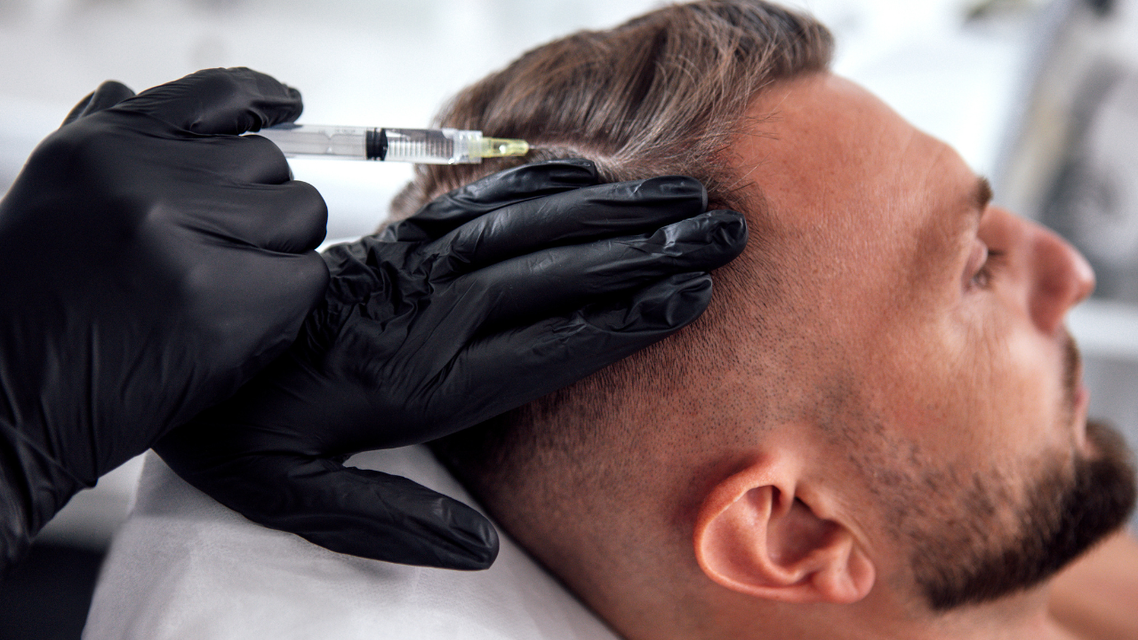
KEY TAKEAWAYS
- Autologous secretome therapies may represent the next frontier in personalized hair restoration.
- Hair restoration is evolving beyond PRP and exosomes toward more targeted regenerative biologics.
- Accurate diagnosis and individualized treatment remain essential as regenerative hair loss therapies advance.
The field of hair restoration is evolving rapidly, driven by advances in regenerative medicine and a deeper understanding of follicular biology. Modern Aesthetics spoke with hair transplant surgeon Alan J. Bauman, MD, ABHRS, about emerging technologies such as autologous hair follicle stem cell banking, secretome therapies, and next-generation biologics, while also addressing the nuances of platelet-rich plasma (PRP) optimization, exosome characterization, and patient selection. (Editor’s note: This transcript has been lightly edited for clarity and conciseness).
What are the most significant recent developments in hair transplantation, particularly in the realm of regenerative therapies?
Dr. Bauman: The area I am most excited about right now is autologous hair follicle stem cell banking and the development of patient-specific secretome therapies. This represents a meaningful shift in how we think about regenerative medicine in hair restoration. For years, we have relied on biologics such as PRP, extracellular matrix products, and more recently, exosomes derived from various sources. Increasingly, however, patients are asking: “Where does this material come from, and is it safe?” That concern has grown, particularly in the post-COVID-19 era.
Autologous approaches address that directly. By using a patient’s own hair follicle cells, we can create a biologic product that is inherently biocompatible. From a scientific standpoint, hair follicles are uniquely suited for this—they are highly metabolically active and contain a rich population of stem cells. Banking those cells now, especially when they are at their healthiest, opens the door to future therapies that could be significantly more effective and personalized.
Can you walk us through how autologous hair follicle secretome therapy works in practice?
Dr. Bauman: The process is surprisingly straightforward from the clinician’s perspective. We collect a small number of hair follicles during a transplant procedure or by simple extraction in the consultation room. That material is sent to a specialized lab, where it is evaluated for viability. If sufficient cellular material is present, it can be banked for future use and used to generate a secretome.
The secretome is essentially the collection of biologically active substances that cells release when they are cultured. Hair follicle cells do not require a feeder system; they thrive on their own. Once placed in culture media, they rapidly expand and begin secreting a wide range of proteins, cytokines, growth factors, and extracellular vesicles, including exosomes.
After a period of growth, the cells are separated from the surrounding medium. What remains—the “soup,” if you will—is concentrated, filtered, and prepared for delivery to the clinic through lyophilization. That final product is then returned to the clinic, typically within approximately 8 weeks, and can be used therapeutically.
How does the secretome compare to established treatments, such as PRP?
Dr. Bauman: PRP has been a cornerstone of regenerative medicine for more than 2 decades, and we understand it well. We know how to prepare it, how to dose it, and how it interacts with biologic pathways. When we look at the composition of secretome products, however, the differences are striking.
Early proteinomic analyses suggest that the concentration of growth factors in secretome preparations may be 30 to 40 times higher than what we see in PRP. That has important implications for both wound healing and follicular stimulation. In hair restoration, we are not only trying to heal tissue; we are trying to reverse miniaturization and improve follicular function. The signaling environment created by a secretome may be much more robust.
That said, we are still in the early stages. Much of the data we have are from observational studies and pilot trials. Larger, controlled clinical trials will ultimately determine how these therapies perform relative to existing standards.
Exosomes remain a major topic of interest—and controversy. What should clinicians be evaluating when considering exosome-based products?
Dr. Bauman: The first and most important question is: what is the source? Exosomes are only as good as the cells from which they originate. Whether they are derived from placental tissue, amniotic fluid, or established cell lines, the origin influences both the biologic activity and the safety profile.
Beyond source, characterization is critical. Clinicians should be asking for detailed information on particle identity—markers such as CD9 and others that confirm the presence of true exosomes. Proteomic analysis is also essential. It is no longer enough to say a product contains “500 billion exosomes.” We need to know what those particles contain and which biologic pathways they are likely to influence.
MicroRNA profiling is another layer that is becoming increasingly relevant. Certain microRNAs have been associated with hair growth, androgen signaling, and inflammatory pathways. Understanding whether those are present, and in what concentration, can help guide clinical decision-making.
Finally, safety cannot be overstated. Products must be screened for contaminants, including bacteria, DNA, and other unwanted materials. There have been cases in the past where improperly characterized or contaminated products led to serious adverse events, which is why regulatory scrutiny has increased.
How has your approach to PRP evolved over time?
Dr. Bauman: Dramatically. Twenty years ago, we were using “gel separator” PRP with very little understanding of how to optimize it. Today, we know that platelet concentration is a key driver of efficacy. The literature suggests that an optimal concentration is approximately 1.5 million platelets per microliter—roughly 5 to 7 times baseline.
Achieving that requires a dual-spin centrifugation process. Many commonly used systems, particularly gel separator tubes, do not reach those levels and may actually produce platelet-poor plasma. That is fine for certain applications, such as skin rejuvenation, but it may not be ideal for stimulating hair growth.
We also measure every preparation. We test both the patient’s baseline platelet count and the final PRP product. That allows us to tailor the treatment and ensure consistency. Over time, we have incorporated additional strategies—such as photobiomodulation, scaffold materials, and polydioxanone (PDO) threads—to enhance and extend the effects of PRP.
How important is diagnostic workup prior to initiating regenerative therapies?
Dr. Bauman: It is absolutely critical. Hair loss is not a single condition; it is a category that includes hundreds of different diagnoses. In many cases, patients have more than 1 condition simultaneously. For example, someone might have androgenetic alopecia combined with telogen effluvium triggered by stress, illness, or medication.
A thorough history and physical examination remain the foundation. We also use targeted laboratory testing when indicated, looking at factors such as ferritin, thyroid function, vitamin D, and hormonal status, particularly in female patients. Nutritional status is another important consideration. If a patient lacks the building blocks for hair growth, no amount of stimulation will produce optimal results.
Genetic testing is also becoming more useful. For instance, variations in sulfotransferase activity can predict how well a patient will respond to topical minoxidil. If we know a patient is a poor responder, we can modify the treatment approach accordingly.
What are your thoughts on translating preclinical research—particularly animal studies—into clinical practice?
Dr. Bauman: Animal models, especially mice, are helpful for understanding mechanisms. However, they are not always predictive of human outcomes. Many treatments that produce impressive hair growth in mice do not translate into meaningful results in humans.
That is why I am particularly interested in the development of human-derived organoid models. These systems allow us to study hair follicles in a more physiologically relevant environment. As those technologies mature, they may significantly improve our ability to evaluate new therapies before they reach clinical use.
What key message would you like clinicians to take away from this evolving landscape?
Dr. Bauman: Innovation is moving quickly, but the fundamentals have not changed. Accurate diagnosis, individualized treatment planning, and evidence-based practice are still the cornerstones of good care. New technologies such as autologous secretome therapy are incredibly promising, but they should be adopted thoughtfully and supported by data.
Ultimately, our goal is to provide safe, effective, and durable outcomes for our patients. That requires both embracing innovation and maintaining a rigorous, patient-centered approach to care.
Ready to Claim Your Credits?
You have attempts to pass this post-test. Take your time and review carefully before submitting.
Good luck!
Recommended
 MAY-JUN 2026 ISSUE
The Science of Dual-Wavelength Photobiomodulation
Jordan R. Plews, PhD; Kay Durairaj, MD, FACSJordan R. Plews, PhD; Kay Durairaj, MD, FACS